
Bench • PC
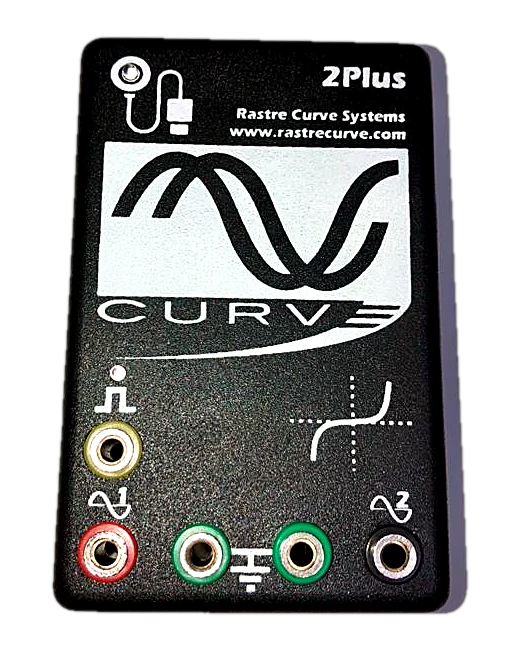
RastreCurve 2Plus
The most complete locator in the line: 4 power profiles and exclusive tests for active components.
- 4 + 4
- 3
- 4 Hz–1 kHz
Understand the VI signature and try it: pick a component and see the curve it draws on the screen.
Low-energy sine signal with a series impedance that limits current and protects the circuit.
Voltage (X axis) and current (Y axis) form the curve: resistors, capacitors, diodes and ICs each draw their own shape.
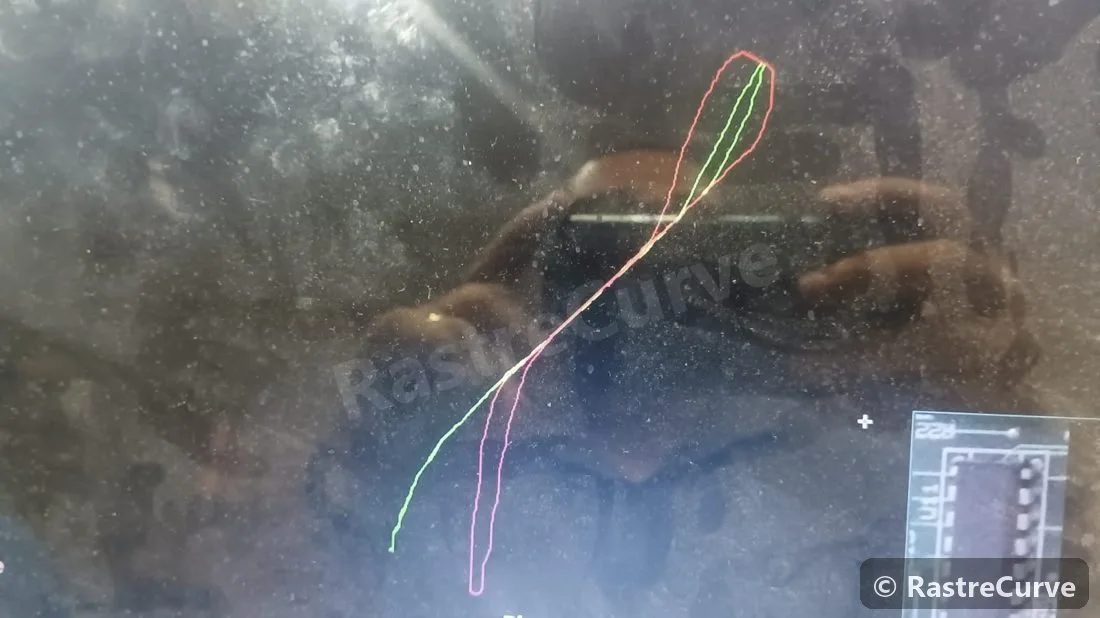
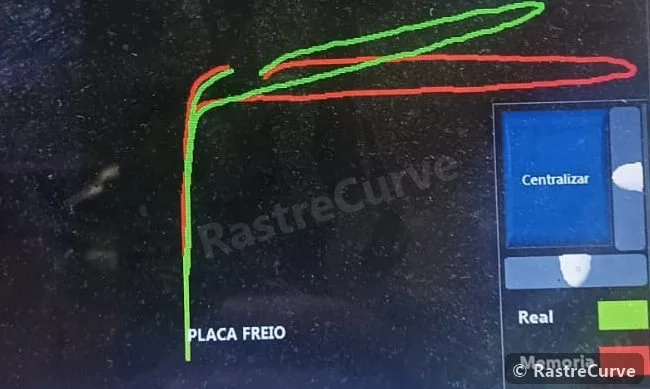
Good board × faulty board, or memory × real board, with percentage difference and visual and audible alerts.
Illustrative simulation of each component’s VI curve. For the full simulator with each model’s real limits, use Interactive Theory.
RastreCurve measures with a pulsed signal: at each measurement the circuit starts from rest (capacitor discharged, inductor with no current). That is why capacitors and inductors draw an open curve that starts at the center.
Curve with a knee: conducts one way (~0.6 V) and blocks the other.
Interactive TheoryDiagnosis without power: safe for the technician and the board.
Schematics help; when there are none, point-by-point comparison still works.
Analog, digital, power, automotive, industrial, TV, audio.
Record the good board once and test the next ones pin by pin.
Over a thousand projects shared by the community.
Less time searching and fewer parts replaced by trial and error.
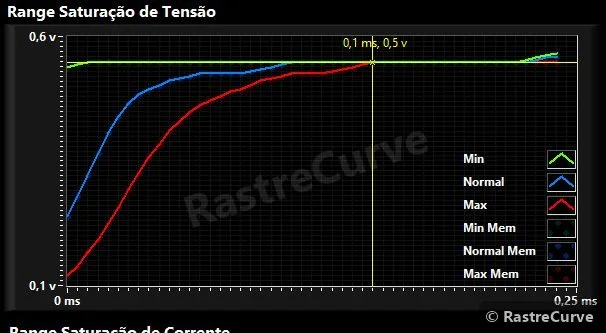
Series impedance and 10 mA maximum current. On bench models, excitation is pulsed: 1.5 ms per measurement.

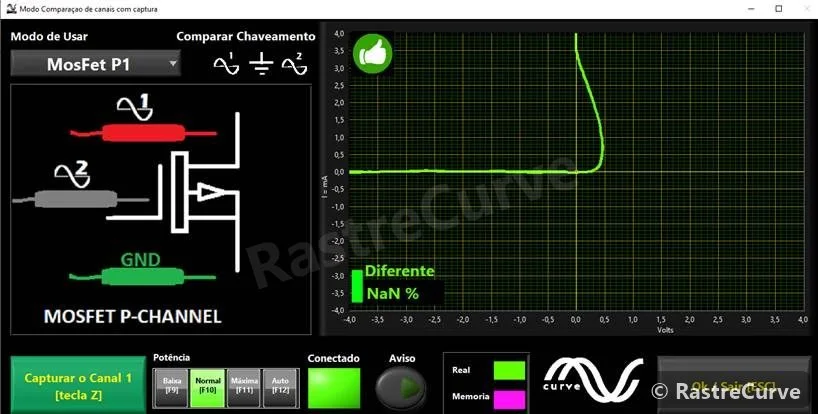
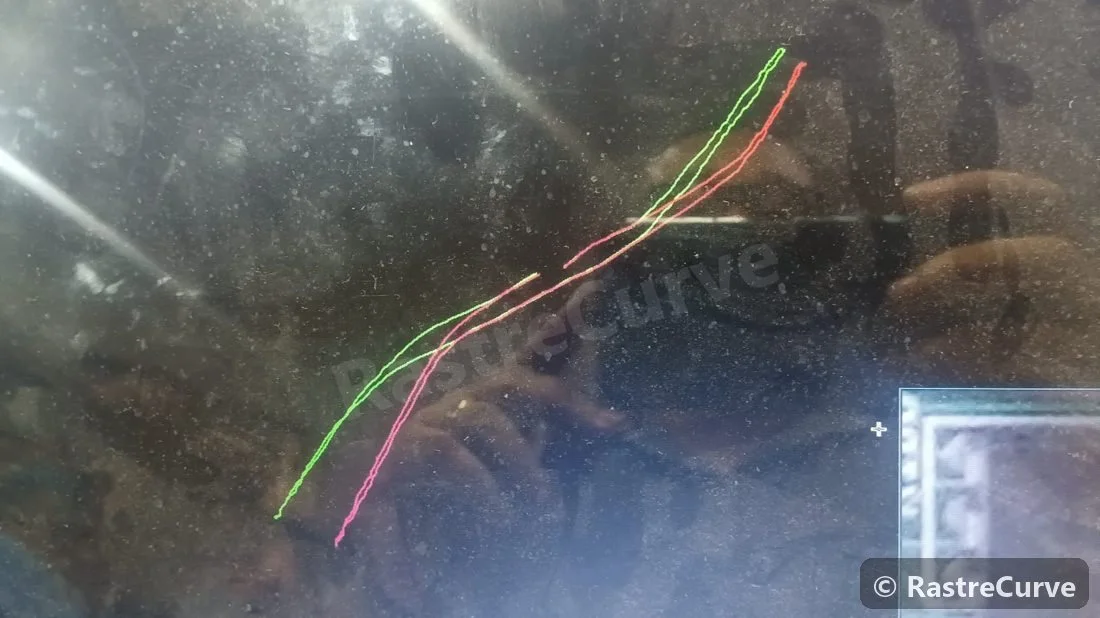
The most complete locator in the line: 4 power profiles and exclusive tests for active components.
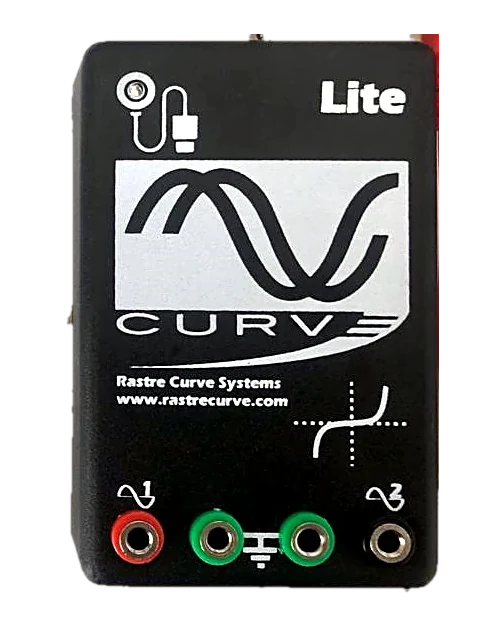
Essential curve comparison: two independent channels, photo projects and the curve cloud.
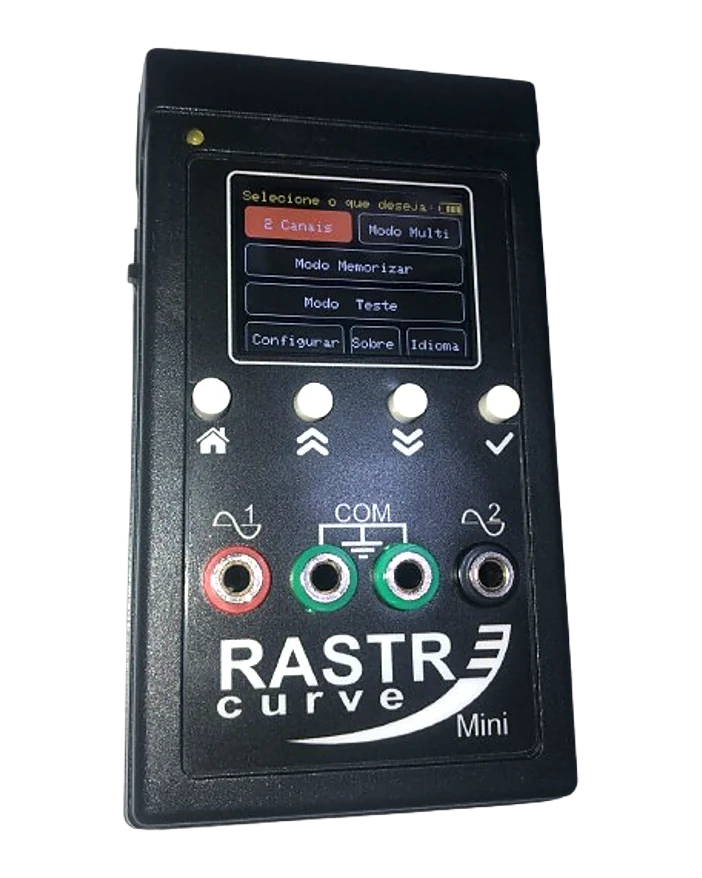
A fault locator in the palm of your hand: color screen, battery and internal memory, no computer needed.
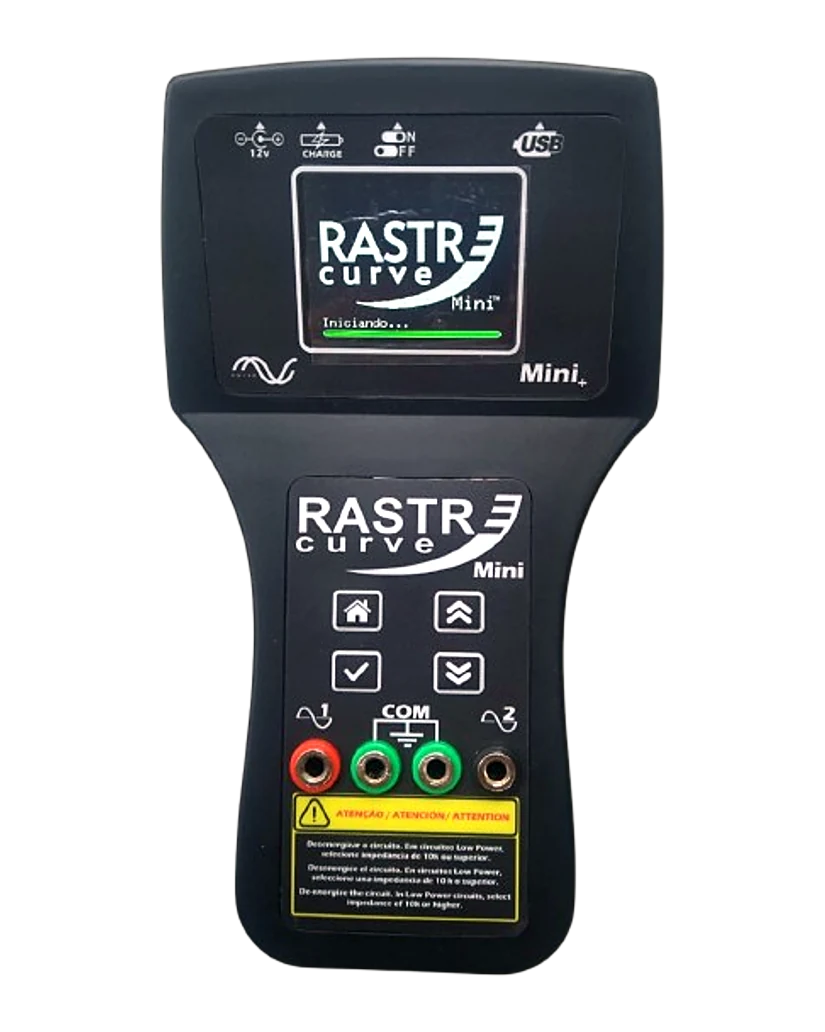
The best of both worlds: everything the Mini does, with a long-lasting Li-ion battery and PC software.
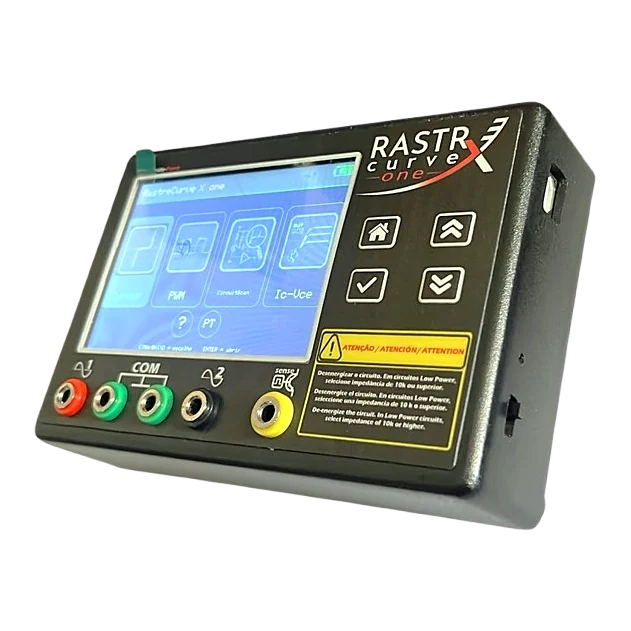
Portable curve tracer with a 4″ screen, 2 to 32 Vpp signal, Multi, CircuitScan, Ic-Vce and PWM – plus Windows software.
Talk to us and get a no-obligation quote for the right model for your bench.